Want to see it?
Book a visit to our Dar lab + we’ll arrange washing station tours in Mbinga or Kagera during harvest.
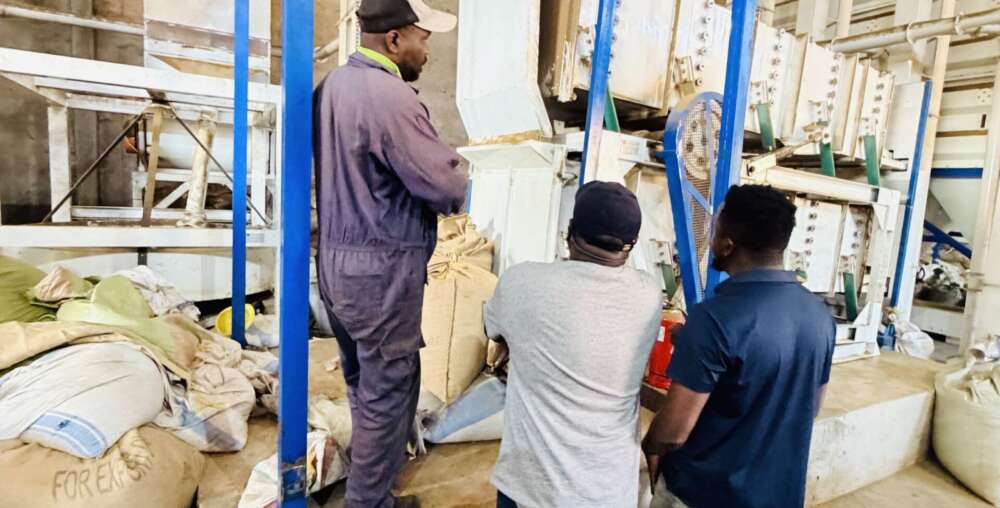
From Cherry to Green Bean
Great coffee isn’t an accident. It’s 20+ steps from tree to export bag.
At Beacon Heights, we supervise or directly manage processing in Kagera for Robusta/Hard Bean and in Mbinga/Songwe for Arabica. Here’s what happens to your coffee before it reaches Dar es Salaam.
1. Harvest: Selective Picking Is Step One
Timeline: May–Sept Kagera | Jan–May Mbinga
Our farmer groups hand-pick only ripe, red cherry. In Mbinga, pickers do 3–4 passes through each farm so only perfect cherry is processed. In Kagera, we train AMCOS to sort cherry at the buying station and remove under-ripe, over-ripe, and foreign matter.
Why you care: Green/unripe cherry = astringent, grassy cups. We eliminate it at source.
2. Pulping: Removing the Skin
Timeline: Same day as harvest
For Washed Arabica & Hard Bean – Mbinga & Kagera
Cherry goes through a mechanical pulper within 8 hours of picking. This removes the outer skin but leaves mucilage. We use eco-pulpers at key washing stations to save water.
For Natural Robusta – Kagera
Whole cherry skips pulping and goes straight to drying. This creates heavy body and low acidity for espresso.
Why you care: Fast pulping prevents uncontrolled fermentation and “onion” defects.
3. Fermentation: Developing Flavor
Timeline: 12–36 hours for washed
Pulped beans sit in tanks to break down sticky mucilage. In Mbinga we use dry fermentation for cleaner, brighter cups. In Kagera, wet fermentation is common for Hard Bean. Our field team checks pH and smells tanks to decide when it’s ready. No soap, no over-ferment.
Why you care: Bad fermentation = vinegar/sour notes. Good fermentation = clarity and sweetness.
4. Washing: Clean Parchment
After fermentation, parchment is washed in clean channels to remove all mucilage. In Mbinga, we triple-wash our 86+ lots. Clean parchment = clean cup.
5. Drying: The Most Critical Stage
Timeline: 7–15 days
This is where most African coffee is ruined. We don’t let that happen.
Method | Where We Use It | How We Do It |
|---|---|---|
Raised African Beds | Mbinga specialty + Kagera Hard Bean | Parchment dried on mesh tables. Turned every hour. Slow, even drying = blue-green color, no mold. |
Patios | Kagera Robusta FAQ | Concrete patios for volume lots. Covered at night and during rain. |
Mechanical | Emergency only | Guarded dryers used if rains hit. We never over-heat. |
Target: 10.5–12.0% moisture. We check with Sinotech meters daily. Why you care: >12.5% = mold risk in transit. <10% = loss of aroma. We hit the range, every time.
6. Storage: Resting Parchment
Dry parchment rests in AMCOS warehouses or our Songwe hub for 30–60 days. This stabilizes moisture and improves cup balance. We monitor for pests and re-dry if needed before trucking.
7. Milling: Parchment to Green Bean
Timeline: At TCB-approved mills in Moshi or Songea
Beacon Heights supervises milling for all export lots.
- Hulling: Removes parchment layer
- Polishing: Optional – removes silverskin
- Grading: Beans pass through screens to separate AA, AB, PB, C. Defects removed by hand + color sorters.
- Gravity Table: Separates by density. High-density = better roast.
Why you care: Poor milling = brokens, mixed grades, uneven roast. We cup post-milling to confirm nothing was damaged.
8. Final QC & Packing – Dar es Salaam
Green coffee arrives at our Ubungo warehouse. We:
- Cup every lot per SCA protocol
- Run screen analysis + defect count
- Check moisture one last time
- Pack in 60kg jute with GrainPro liner on request
Then we issue your Beacon Heights QC Report.
Process by Coffee Type – Quick Guide
Your Coffee | Process We Use | Flavor Result |
|---|---|---|
Mbinga AA Washed | Washed, 24hr dry ferment, raised beds | Jasmine, bergamot, clean, bright |
Mbinga Honey | Pulped, mucilage left on, raised beds | Red fruit, syrupy body, sweet |
Kagera Hard Bean | Washed, wet ferment, raised beds/patio | Cocoa, nutty, mild acidity |
Kagera Robusta | Natural or Washed, patio dried | Dark chocolate, heavy, espresso crema |
What “Beacon Heights Processed” Means for You
- No surprises: We control or monitor every step. The sample you approve is what you get.
- Traceability: We can tell you which washing station, which drying date, which mill.
- Claim protection: Because we dry to spec and cup post-milling, our defect rate at arrival is <1%.